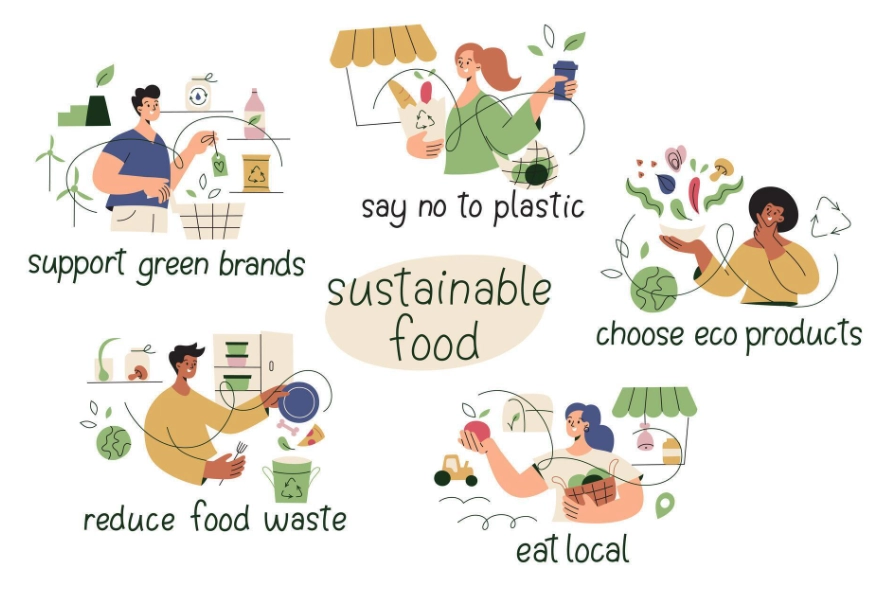
Let's be honest. When you hear "sustainable eating," you might picture a farmer's market devotee with a perfect wicker basket, or someone who only eats kale grown in their backyard. It feels exclusive, expensive, and frankly, a bit out of reach. I thought that too, until I tried it. My journey started with a simple goal: waste less food to save money. What I discovered changed my entire view on what I put on my plate. Sustainable eating isn't about perfection; it's about making better choices, most of the time, in a way that works for you. It's about connecting the dots between your health, your wallet, and the health of the planet. This guide strips away the jargon and gives you the practical, actionable steps you can start today.
Your Quick Guide to Sustainable Eating
What Sustainable Eating Really Means
Forget the textbook definitions. In practice, sustainable eating is a food system mindset. It considers the entire lifecycle of your food—from how it's grown and transported to how you store it and what you do with the scraps.
It rests on three interconnected pillars:
Environmental Health: This is the big one. It means choosing foods that require less water, land, and energy to produce, and that generate fewer greenhouse gas emissions. A report from the UN's Food and Agriculture Organization highlights how food systems are major contributors to environmental challenges. The goal is to lessen that impact.
Personal & Economic Health: It's not sustainable if it breaks your budget or harms your health. Sustainable eating champions nutritious, whole foods. Surprisingly, many core practices, like eating more plants and reducing waste, are famously budget-friendly. It’s a win-win.
Social & Ethical Health: This is about fairness. It considers the welfare of farmers, fishers, and food workers. Are they paid fairly? Are animals treated humanely? It pushes us to think about the hands that feed us.
How to Start Sustainable Eating (The Practical Way)
Don't try to overhaul everything overnight. Pick one or two of these areas to focus on. Master them, then add another. This is how habits stick.
1. Rethink Your Plate: Prioritize Plants
You don't have to go vegan. Start with a "plant-forward" approach. Make vegetables, fruits, legumes, and whole grains the stars of your meal, with meat or fish playing a supporting role. Try "Meatless Mondays" or designate one dinner a week as fully plant-based.
Why it works: Animal agriculture, especially for beef and lamb, is resource-intensive. The data from sources like the Environmental Protection Agency on greenhouse gas inventories consistently shows this. Shifting even a few meals has a disproportionate positive effect.
My failed experiment: I once tried to go fully plant-based in a week. I ended up eating a lot of processed vegan cheese and fries. Not healthy, not sustainable. The successful shift happened when I simply learned to cook three great bean-based dishes (a chili, a lentil soup, a chickpea curry) that I genuinely loved.
2. Be a Seasoned Shopper: Local and Seasonal
Food that travels less has a lower transportation footprint. Seasonal produce is often fresher, tastier, and cheaper because it's abundant. Find a local farmers' market or join a CSA (Community Supported Agriculture) box.
But here's the realistic take: Don't beat yourself up for buying bananas or coffee. Some foods simply don't grow where you live. The goal is to increase your proportion of local/seasonal items, not achieve 100% purity. In winter, that might mean relying on frozen or preserved local berries instead of fresh ones flown from another continent.
3. Declare War on Food Waste
This is the most actionable and immediately rewarding practice. If food waste were a country, it would be the third-largest emitter of greenhouse gases globally. In your kitchen, it's just money in the trash.
- Plan Before You Shop: Check your fridge and pantry. Make a list. Stick to it. Impulse buys are the number one source of waste in my house.
- Store Food Smartly: Learn the proper storage for different items. Herbs in a jar of water. Potatoes away from onions. Bread in the freezer (it toasts perfectly from frozen).
- Love Your Leftovers: Designate a "eat me first" shelf in the fridge. Get creative. Roasted veggies can become soup or a frittata. Stale bread becomes croutons or breadcrumbs.
4. Look Beyond the Supermarket
Consider the packaging. Can you buy loose vegetables instead of pre-packed ones? Can you use a reusable bag? Choose products with minimal or recyclable packaging.
Think about the source. When you buy animal products, look for certifications like Animal Welfare Approved or organic labels that have stricter guidelines on environmental practices. It often means spending a bit more, but eating less of a higher-quality product is a sustainable trade-off.
Common Sustainable Eating Myths Debunked
Let's clear up some confusion that stops people from starting.
Myth 1: "It's too expensive." The cornerstone practices are often cheaper. Beans and lentils cost less than meat. Reducing waste saves you money on groceries you were just going to throw out. Buying in-season produce is cheaper. The expense comes if you only buy niche, packaged "superfoods" or organic everything. You don't need to.
Myth 2: "I have to be vegan to make a difference." This is an all-or-nothing trap. A collective shift where millions of people simply eat less meat has a far greater impact than a small number of people being perfectly vegan. Every plant-based meal counts.
Myth 3: "My individual choices don't matter." They do. Consumer demand drives supply. When more people ask for plant-based options, loose produce, or ethically sourced products, supermarkets and restaurants respond. You also influence your friends and family just by talking about what you're doing.
Your Food Waste Action Plan
Since this is such a critical and manageable part of sustainable eating, here’s a concrete plan. Print this and stick it on your fridge.
| Common Waste Item | Why It Usually Goes Bad | The Sustainable Fix |
|---|---|---|
| Bagged Salad / Leafy Greens | Gets soggy and slimy in the bag. | As soon as you get home, wash, dry thoroughly in a salad spinner, and store in a container lined with a paper towel. It lasts a week. |
| Bananas | They ripen too fast as a bunch. | Separate them from the stem when you get home. Freeze overripe bananas (peeled) for smoothies or banana bread. |
| Bread | Goes stale or moldy before you finish it. | Slice and freeze it immediately. Take out slices as needed. They toast directly from frozen. |
| Leftover Cooked Grains (Rice, Quinoa) | Forgotten in the back of the fridge. | Freeze in single-serving portions. Reheat by sprinkling with water and microwaving, or toss straight into soup. |
| Vegetable Scraps (ends, peels, stalks) | Seen as trash. | Keep a gallon bag in the freezer. Toss in onion skins, carrot tops, celery ends, herb stems. When full, make a zero-waste vegetable broth. |
The mental shift is key: Start seeing "scraps" as ingredients. Beet greens are a delicious sauté. Broccoli stems, peeled and sliced, are great in stir-fries. It's not just thrifty; it feels incredibly resourceful.
Your Sustainable Eating Questions Answered
The path to sustainable eating is a series of small, conscious choices, not a dramatic overnight conversion. It's about progress, not perfection. Start with what seems easiest—maybe it's freezing your bread or trying one meatless dinner this week. Each step builds confidence and creates a ripple effect. You'll eat better, spend smarter, and gain the quiet satisfaction of knowing your food choices are part of the solution. That's a powerful feeling you can build a lasting habit on.