Let's cut to the chase. Cross-country skiing isn't just sliding on snow. It's a full-body workout disguised as a serene journey through winter landscapes. It's cheaper and more accessible than downhill skiing, and honestly, it's less intimidating. You don't need a lift ticket or a mountain. A flat field or a groomed trail in a state park will do. I've been doing this for over a decade, and I still remember the frustration of my first time—skis going nowhere, poles tangling, that feeling of inelegant struggle. This guide is here to make sure your first time is better than mine was.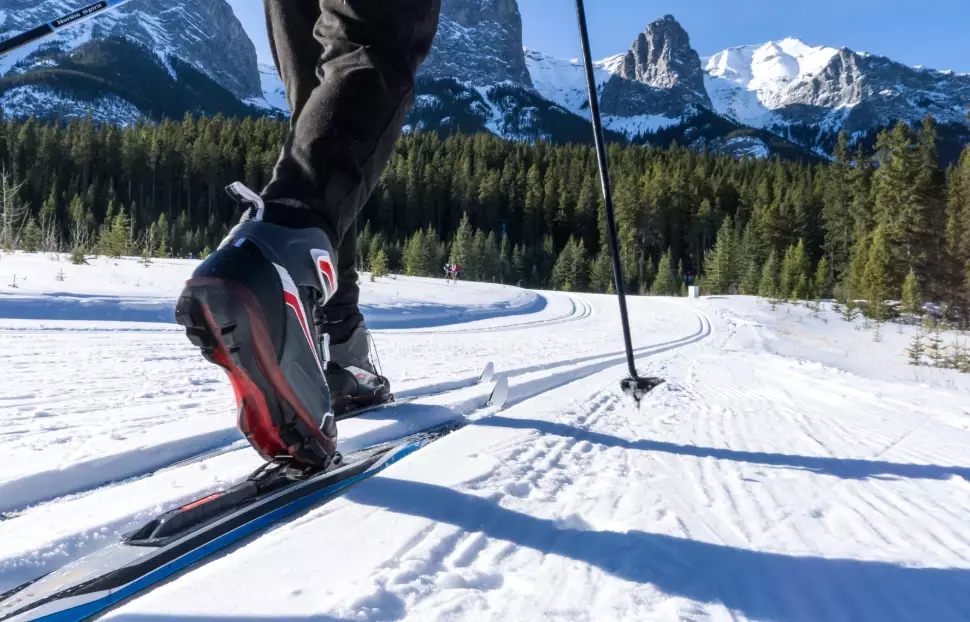
Navigate This Guide
How to Choose Your First Cross-Country Skiing Gear (Without Breaking the Bank)
You can spend a fortune, but you shouldn't. For your first season, renting is the smartest move. It lets you try different styles without commitment. If you're buying, focus on these three core pieces.
Skis: It's All About the Camber and Kick Zone
For classic skiing, the magic happens underfoot. The ski has a camber (arch). When you stand on it flat, the middle section, the "kick zone," lifts off the snow. When you shift your weight onto one ski, that zone presses down to grip the snow for push-off. Getting the right stiffness (camber) for your weight is critical—it's the most common fitting mistake.
Waxable vs. Waxless Skis: This is a big fork in the road.
- Waxless (Fishscale or Skin Skis): The beginner's best friend. The kick zone has a textured pattern (like fish scales) or a synthetic skin material that grips when weighted and slides when unweighted. Zero maintenance beyond cleaning. Perfect for casual skiers and variable snow conditions. The grip isn't as powerful as a perfectly waxed ski, but the convenience is unbeatable. My first pair were waxless, and I have zero regrets.
- Waxable Skis: These have a smooth base. You apply a special "kick wax" to the kick zone for grip. It offers superior performance and glide when matched correctly to the snow temperature. It's also a rabbit hole of wax tins, scrapers, and corkers. I don't recommend it for true beginners unless you're diving in headfirst with a mentor.
Boots and Bindings: The NNN System is Your Default
The Nordic Norm (NNN) system is the near-universal standard for recreational and sport skiing. Boots have a single, prominent bar at the toe. Bindings clip onto that bar, allowing your heel to lift freely. Ensure your boots and bindings are compatible—they must be from the same "generation" of NNN (e.g., NNN, NNN BC). Just tell the shop you need an NNN setup.
Poles: Height is Everything
Poles that are too long will ruin your technique. A classic rule of thumb: stand the pole upright next to you. The basket (the round part at the bottom) should be at armpit height. For skate skiing, poles are longer, typically reaching between your chin and mouth.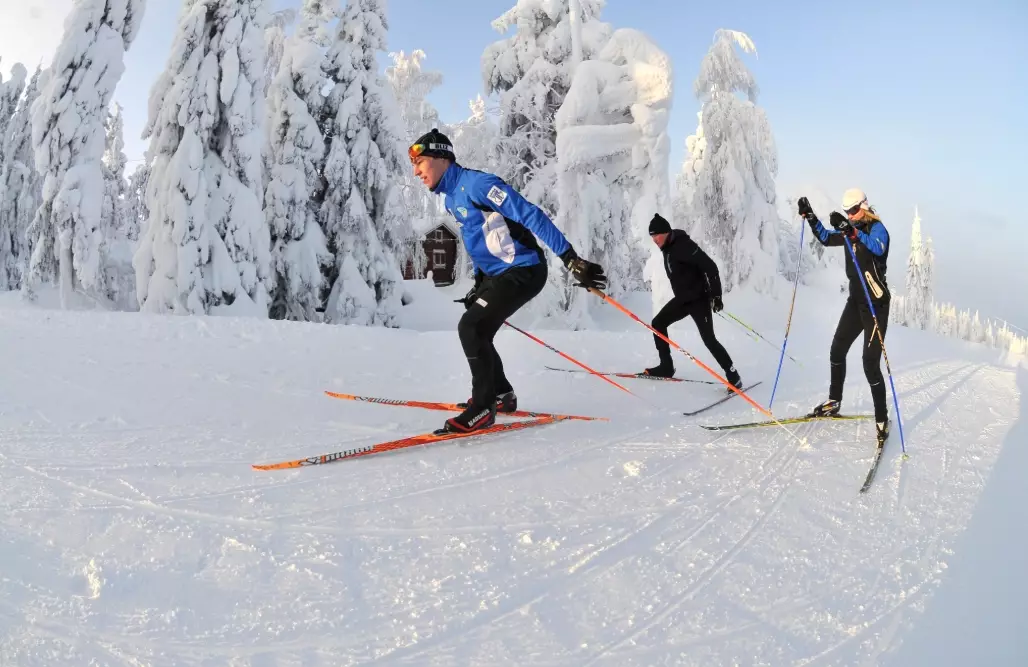
Classic vs. Skate Skiing: Which One Should You Learn First?
Think of them as different sports that share a name.
| Aspect | Classic Skiing (Diagonal Stride) | Skate Skiing |
|---|---|---|
| Motion | Forward stride in parallel tracks, like walking or running. Heel lifts off ski. | V-shaped pushing motion, like ice skating or speed skating. |
| Terrain | Groomed tracks, flat trails, gentle hills. More versatile for ungroomed snow. | Requires a wide, firm, groomed "skate lane." Less forgiving off-piste. |
| Learning Curve | Easier to get moving. Harder to master efficient technique. | More athletic starting point. Requires better balance and power. |
| Physical Demand | Full-body, rhythmic. Excellent endurance builder. | High-intensity, explosive. Incredible cardio and leg workout. |
| My Recommendation | Start here. It's intuitive, the gear is simpler, and you can access more trails. | Try after you're comfortable on classic skis. Take a lesson—it's crucial. |
The biggest mistake I see? People trying to skate ski on classic gear, or on a trail that's too soft. It's exhausting and ineffective. Start with classic.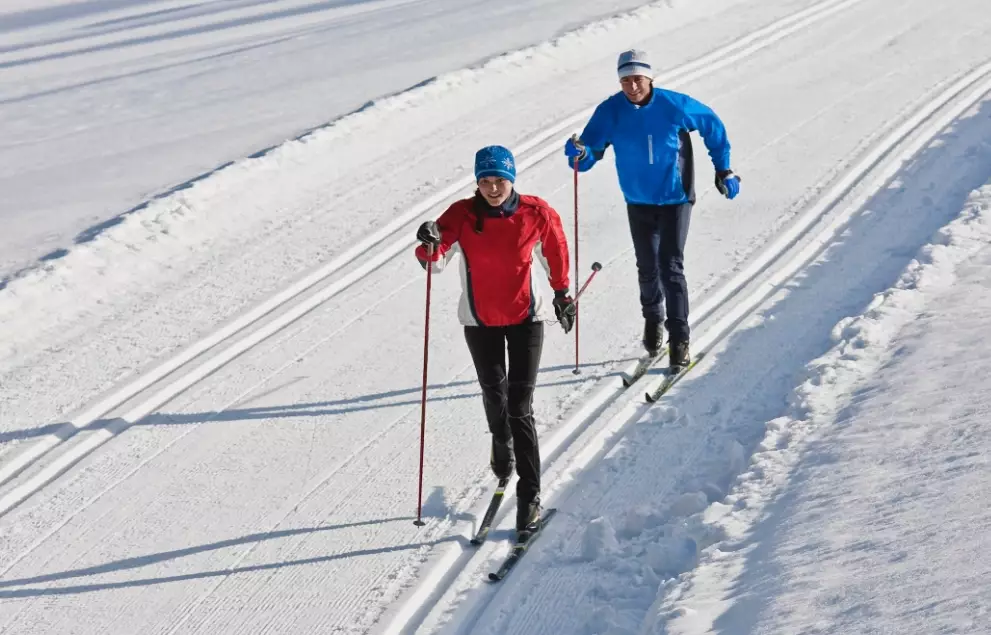
Where to Go: Iconic Cross-Country Skiing Destinations Worth the Trip
You can ski anywhere there's snow, but some places have perfected the experience. Here are three standouts, each with a different vibe.
1. Royal Gorge Cross Country Ski Resort, California
Why it's special: It bills itself as North America's largest cross-country ski resort, with over 200 km of meticulously groomed trails. The Sierra Nevada scenery is stunning.
Trail Info: Massive network. 30% beginner, 40% intermediate, 30% expert. Separate trails for classic and skate. Well-signed and mapped.
Logistics: Near Truckee, CA. Day passes run around $35-$45. Rentals are top-notch on-site. Lodging in Truckee or at the resort's Rainbow Lodge. Check their website for snow reports—they have an extensive snowmaking system for early/late season.
My take: It's a destination. Go for a weekend. The scale is impressive, but it can feel a bit "corporate" compared to a quiet forest trail.
2. The Northwoods of Minnesota (Maplelag, Giants Ridge)
Why it's special: This is the heartland of American Nordic skiing. Community-focused, family-run areas with incredible trail systems through beautiful forests and lakes.
Trail Info: Maplelag is an all-inclusive resort with 55 km of trails right outside your cabin door. Giants Ridge in Biwabik is a world-class biathlon venue with 65 km of FIS-certified trails.
Logistics: Fly into Minneapolis and drive north (3+ hours). Day passes are more affordable, often $15-$25. The vibe at Maplelag is unique—meals are included, and it feels like a summer camp in winter. You're there to ski, eat, and relax.
My take: For authenticity and a deep dive into ski culture, this region is unbeatable. The cold can be serious, though—dress in layers.
3. Gatineau Park, Quebec/Canada
Why it's special: Managed by the National Capital Commission, it offers 200 km of groomed trails right at the doorstep of Ottawa/Gatineau. A perfect blend of accessibility and wilderness.
Trail Info: A mix of wide parkways (great for skate skiing) and narrower woodland trails. Trail #1 is a famous 50 km loop for the ambitious. Excellent signage and frequent warming huts.
Logistics: Multiple access points. Daily trail fees are required (check the NCC website). Rentals available at several outfitters in Chelsea or Ottawa. Stay in Ottawa for city amenities or in a Gatineau bed & breakfast.
My take: The gold standard for a major urban park ski system. It gets busy on weekends, so go early or on a weekday.
3 Common Beginner Mistakes (And How to Fix Them)
- Leaning back. When you're nervous going downhill, your instinct is to sit back. This puts you in the backseat, removes steering control from your ski tips, and guarantees a fall. Fix: Bend your ankles and knees, keep your weight centered over your feet, and project your chest slightly forward. It feels wrong but is absolutely right.
- Poling with straight arms. You're not planting a flag. Your poles are for propulsion, not balance. Fix: Plant the pole with a relaxed arm, then use your core and lat muscles to push your body past the planted pole. Your arm should straighten during the push, not at the start.
- Not dressing properly. Cotton kills. You will sweat, even on cold days. Cotton absorbs sweat and stays wet, making you cold. Fix (My Layering System): A synthetic or wool base layer. A light fleece or thin insulated mid-layer. A windproof, breathable, water-resistant shell jacket and pants. Avoid heavy down jackets—you'll overheat in 10 minutes.
Frequently Asked Questions (The Real Ones)
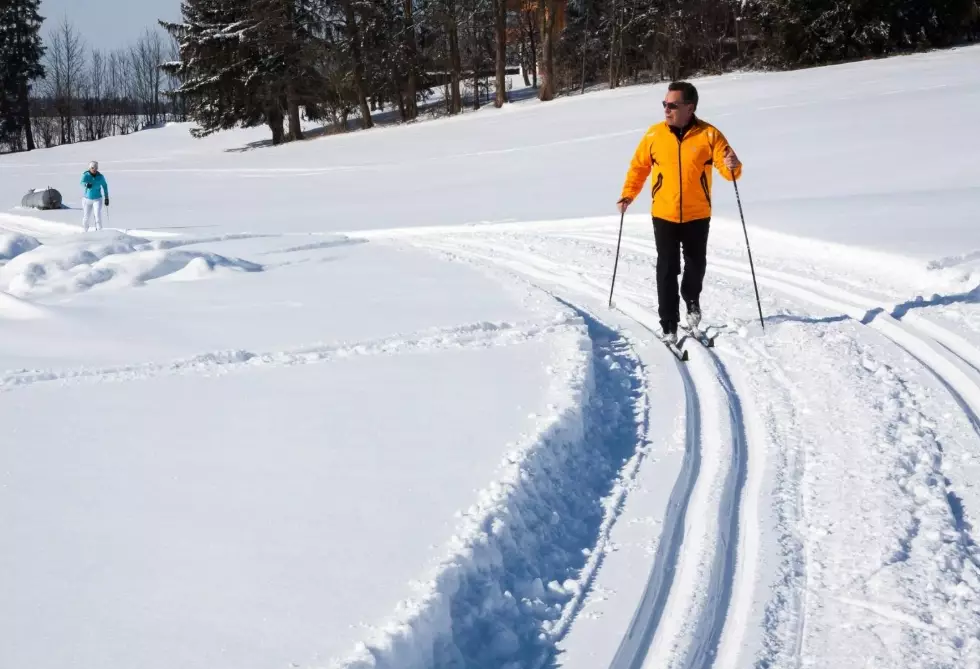 The trail is calling. It's quieter out there, just the sound of your skis gliding and your breath in the cold air. The learning curve is real, but the payoff—fitness, peace, and a connection to winter—is immense. Start small, rent some gear, find a local golf course or park with tracks, and just go. You'll figure it out. Everyone out there was a beginner once, shuffling along, just like you will be. And that's perfectly okay.